How to Read the Salary Range in a Job Posting
A posted salary range tells you more than two numbers, if you know which questions to ask of it. This guide explains what the range covers, why some are so wide, and where real offers tend to land inside it.

Steven Schulz
· 7 min read
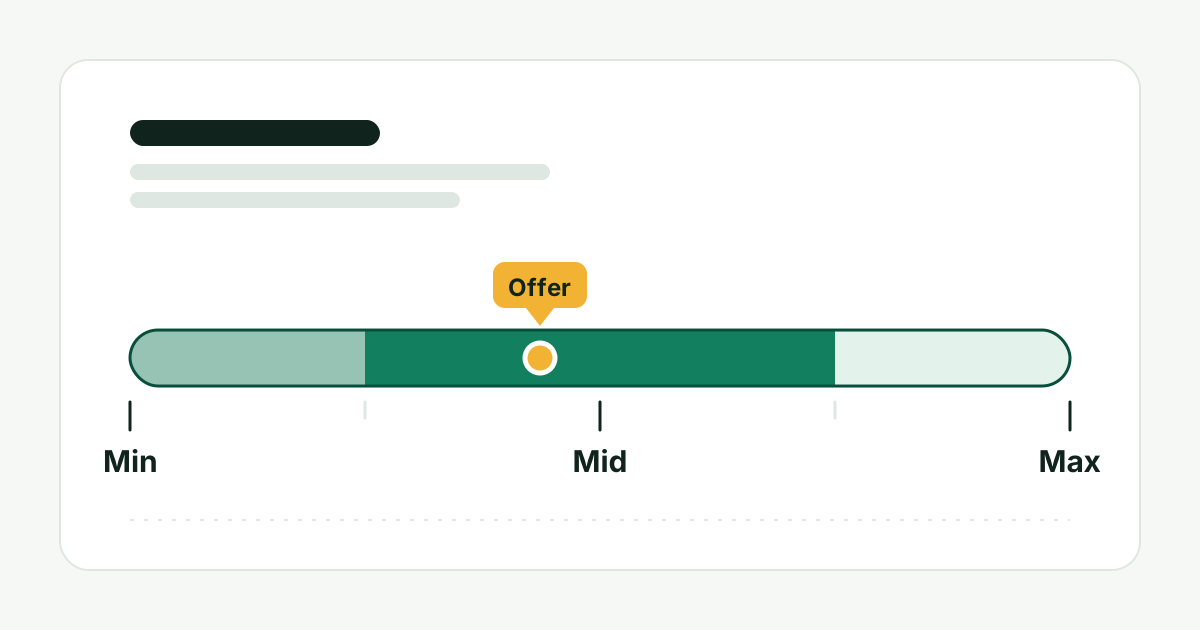
A salary range in a job posting is the employer's statement of what it expects to pay for the role, and it is the most useful single line in the whole posting. It is also routinely misread: people anchor on the top number and ignore the sentence underneath it. Reading a range well takes about two minutes and saves you from applying to jobs that cannot pay what you need.
What the range actually describes
A posted range is almost always base pay for the role: annual salary for salaried jobs, an hourly rate for hourly ones. Unless the posting says otherwise, it does not include bonus, commission, equity or the value of benefits.
There are two different things an employer can mean by "range", and postings rarely say which one you are looking at:
- The pay band. The full span the company pays anyone at that level, from the newest hire to someone who has been in the seat for six years. Bands are wide by design, because they have to hold both people.
- The hiring range. The narrower slice of the band the company is prepared to offer a new hire right now. This is the number you actually care about.
In states that require pay ranges in postings, the legal wording generally asks for what the employer in good faith expects to pay for the position, which points toward the hiring range. In practice many companies publish the whole band anyway, because it is simpler and safer for them. The rules differ by state and are covered in pay transparency laws by state; here the point is only that a posted range can be either thing, and you have to work out which.
A quick test: if the top of the range is more than about one and a half times the bottom, you are probably looking at a full band, or at several bands glued together.
Why some ranges are so wide
A range like "$98,000 to $210,000" is not a typo and usually not bad faith. It is the result of one posting doing several jobs at once. The common causes:
- Several levels in one posting. A company opens a single "Software Engineer" requisition and decides after the interviews whether you are mid-level, senior or staff. The posted range runs from the bottom of the lowest level to the top of the highest.
- Several locations in one posting. A remote role open across the United States may be paid differently depending on where you live. The posting shows the lowest zone's minimum and the highest zone's maximum. How that works is explained in geographic pay zones.
- Both at once. Three levels times three pay zones produces a range that tells you almost nothing until you narrow it down.
- A cautious legal team. Publishing the widest defensible range lowers the risk of offering outside it later.
The better postings break the range apart for you: one line per level, or one line per zone. When a posting does not, the job description usually gives the level away. Count the signals: years of experience requested, whether you would "own" or "contribute to" a system, whether you lead other people, whether the word "strategy" appears. A posting that asks for three years and close collaboration with a senior colleague is not paying the top third of a range that also covers staff-level hires.
Base, bonus, OTE and total compensation
Before comparing two postings, check that the numbers measure the same thing.
| Term in the posting | What it includes | What to check |
|---|---|---|
| Base salary | Fixed pay only | Annual or hourly, and for how many hours |
| OTE (on-target earnings) | Base plus commission at 100 percent of quota | The base-to-variable split and how many people hit quota |
| Total compensation | Base plus bonus plus equity, sometimes benefits | Which parts are guaranteed and which are estimates |
Sales roles are where this matters most. A posting for an account executive that says "$180,000 OTE" might be a $90,000 base with $90,000 in commission, or a $130,000 base with $50,000 in commission. Those are very different jobs for your rent payment. Some states' rules require the base range to be shown even when a commission plan exists, so a careful posting gives both figures. If you see only an OTE number, ask for the split in the first conversation.
For engineering and product roles at companies that grant stock, base may be well under the full package. A posting that shows a lower base than a competitor can still be the better offer once equity is counted, and the reverse is also true when the equity is hard to value. The basics are in equity compensation explained.
Where offers land inside the range
Employers rarely hire at the top of a range, and there is a structural reason for it. Pay bands are built around a midpoint, which is the company's target pay for someone fully competent in the role. Someone hired at the maximum has nowhere to go: no room for raises without a promotion. So compensation teams steer new-hire offers toward the lower and middle part of the band, and keep the top for people who have grown in the role.
A workable assumption, when you know nothing else:
- Bottom quarter: you meet the requirements but are stretching into the level, or you are changing fields.
- Around the midpoint: you have done this exact job before and can show it.
- Upper third: you bring something scarce the posting specifically asks for, or you hold a competing offer, or the company is hiring you slightly under-leveled and knows it.
This is why the midpoint, not the maximum, is the honest number to plan around. If the midpoint of a range does not work for your budget, the job probably does not either. If the minimum would work and the midpoint would be good, apply.
Read the sentence under the number
Most postings follow the range with a line or two of text. People skip it. It usually contains the real information:
- "Actual compensation depends on location, skills and experience" tells you the range covers several zones or levels.
- "This range applies to candidates in [named states or cities]" tells you the figure may be a specific zone's range rather than the national one, and that pay elsewhere may be lower.
- "The range shown is for the primary location" means the same thing, less clearly.
- "This role is eligible for bonus and equity" tells you the range is base only.
- "We do not typically hire at the top of the range" is rare, and unusually honest.
A worked example
Take a posting from a 400-person software company for a remote "Product Designer", range $105,000 to $185,000, with the note that pay depends on level and location and that the role is eligible for equity.
The range is wide (the top is about 1.76 times the bottom), so it covers more than one thing. The description asks for "4+ years" and says the designer will "lead design for one product area", which reads as senior, not staff. Suppose the company has two levels in the posting and two pay zones. A plausible reconstruction is a senior band of roughly $125,000 to $165,000 in the higher zone, with a lower zone some way beneath it and a staff band on top. If you live in a mid-cost city and have five years of experience, the realistic conversation is somewhere in the $120,000s to $140,000s, not $185,000.
You cannot know the exact structure from outside. You can check your reconstruction against other employers: the salary page for product designers shows what employers have published for the role, and the same exists for other roles under salaries. Those pages are built from pay ranges published in postings over the last 180 days, so they show what companies say they pay.
Use the range before and during the process
A range is most valuable early, before either side has invested time.
- Before applying: decide whether the midpoint works. If only the top quarter would, treat the role as a long shot and say so to yourself.
- In the recruiter screen: ask which level the role is being hired at and what the range is for your location. A good phrasing is "The posting shows $105,000 to $185,000. What is the range for this level where I live?" Recruiters answer this question all day.
- When asked for your expectations: answer inside the posted range, in its upper half if your experience supports it. Naming a figure above the posted maximum mostly ends conversations.
- At the offer: compare the number with the range you were given for your level and zone, not with the posting's maximum. That comparison tells you how much room is left, which is the starting point for negotiating the offer.
What to do next
Pick three postings you were planning to apply to and do the two-minute read on each: is it base only, is the range one band or several, what does the sentence under the number say, and does the midpoint work for you. Then compare each with published ranges for the same role. On this site every listing shows the employer's own published range where one exists, so you can scan open remote jobs and sort out the ones worth your evening before writing a single application.