Remote, Hybrid, Distributed: What Job Postings Really Mean
Employers use remote, hybrid, distributed and remote-first for very different arrangements, and the word in the headline rarely tells you which one you are getting. This guide translates the terms and lists the questions that settle it.

Steven Schulz
· 7 min read
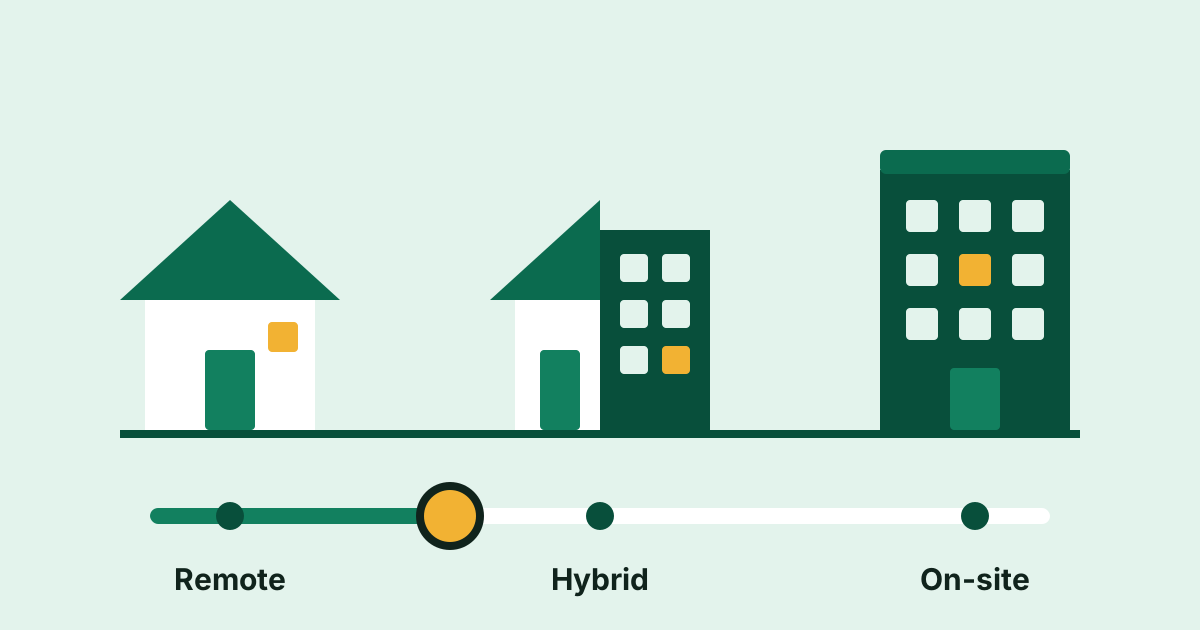
"Remote" in a job title is a marketing word until the rest of the posting defines it. It can mean work from any US state with no office to go to, or it can mean your home within an hour of Denver and two days a week at headquarters. The terms below have no legal definitions and no industry standard, so the only reliable method is to read for three things: where you must live, where you must appear, and when you must be online.
The vocabulary, translated
| Term in the posting | What it usually means | What it leaves open |
|---|---|---|
| Fully remote | No regular office attendance | Which states, which hours, how much travel |
| Remote (US) | Remote for US residents with work authorization | Often limited to a list of states |
| Remote-first | Processes are designed for people who are not in an office; offices may exist | Whether leadership actually works that way |
| Remote-friendly | An office-based company that allows some remote employees | Whether remote people get the good projects |
| Distributed | Staff spread across many locations, usually without a headquarters | Time zone spread and meeting hours |
| Hybrid | Some days in an office, some at home | Which days, how many, who decides |
| Flexible | Almost anything | Almost everything |
| Field-based | Home office plus regular travel to customers in a territory | Size of the territory and nights away |
Read the table as a list of prompts. Every entry in the right-hand column is a question the posting should answer, and if it does not, you ask.
Remote with a location attached
Most remote jobs in the United States come with geography. The common forms are these:
- A state list. "Remote in the following states: AZ, CO, FL, GA, NC, TX, WA." The employer is registered as an employer in those states and not in others. This is about payroll, tax and employment law, not about preference, and why remote jobs are limited to certain states explains the mechanics.
- An exclusion list. "Remote, US, excluding California, New York and Hawaii." Same reasoning, inverted.
- A time zone. "Remote, Eastern or Central time." You may live anywhere, but your working day is anchored. A posting like this from a company on the East Coast means early meetings if you are in Oregon. Time zones and core hours shows how to read these schedules.
- A metro radius. "Remote, must reside within 50 miles of Chicago." This is usually a hybrid job in disguise or a role with client visits. Ask how often you will be expected on site.
- A country. "Remote, United States" nearly always means you must both live and work in the US. Working from another country for a few months is a different matter with its own tax and legal consequences, covered in working abroad for a US employer.
If a posting says only "Remote" and nothing else, assume there is a state list that nobody wrote down. Ask before you invest time.
The many kinds of hybrid
Hybrid covers more ground than any other term, and the differences decide where you can live.
- Fixed-day hybrid. Everyone is in on, say, Tuesday through Thursday. Predictable, and it ties you to commuting distance.
- Minimum-day hybrid. Three days a week of your choice, sometimes tracked by badge data. Flexible within the week, same constraint on where you live.
- Team-decided hybrid. Each manager sets the pattern. Your arrangement lasts as long as your manager does.
- Occasional on-site. A few days per month or per quarter. For someone who lives a flight away, this can work as a remote job with travel, if the company pays for the travel. Ask.
- Remote for now. "This role is currently remote" or "remote until our new office opens." Treat it as an office job with a delayed start date.
Two details matter more than the label. First, who can change the policy: a number written into your offer letter is firmer than a company-wide policy that leadership can revise with an email. Second, how attendance is measured. A company that tracks badge swipes means what it says about three days.
Remote-first, remote-friendly and distributed
These words describe how a company works, not where you sit, and they predict your daily experience better than the location line.
In a remote-first or distributed company, decisions are written down, meetings are recorded or summarized, and nobody gains an advantage by being near an office, because either there is no office or it is optional for everyone. The skill these employers screen for is clear writing, described in asynchronous communication.
In a remote-friendly company, the office is the default and remote employees are the exception. That can still be a good job. The risks are specific: decisions made in hallways, meetings where six people share a conference room and you are a face on a screen, and promotion patterns that favor people the executives see. Ask how many people at the level above yours work remotely; the answer tells you how promotion works there.
You can usually tell which kind of company you are dealing with from evidence, not adjectives:
- Where do the executives and your would-be manager live? If all of them are in one city and you would not be, the company is remote-friendly at best.
- What share of the team you would join is remote? One remote person on a team of ten office workers has a different job from the other nine.
- Does the posting describe how the team communicates, or only that it does so "collaboratively"?
- Are all openings remote, or only a few?
The fine print that changes the deal
Several lines near the bottom of a posting can alter the arrangement more than the headline does.
- Travel percentage. "Up to 25 percent travel" is roughly one week a month. For sales and customer-facing roles such as account executive or solutions engineer, remote often means home-based with regular trips to customers.
- Required gatherings. Quarterly on-sites or annual company weeks are common in distributed companies. Check whether attendance is expected and who pays.
- Core hours. "Core hours 10 a.m. to 3 p.m. Pacific" is a schedule requirement even when the word flexible appears next to it.
- Location-based pay. A range that varies by where you live. See geographic pay zones before you compare offers.
- Equipment and stipends. Whether the employer supplies a laptop and pays toward your internet and desk. Details in home office setup and stipends.
- Home office conditions. Some regulated roles, such as healthcare and financial services jobs handling sensitive data, require a private room with a door, a wired connection or a company-managed device.
- Employment type. "Remote contract" may mean you are an independent contractor without benefits, which is a different offer from a remote employee role.
Clues outside the job description
A posting is written once and reused. Other parts of the page are often more current.
- The location field. If the structured location says "New York, NY" and the text says remote, ask which one wins. Copies of a listing on job boards frequently lose this distinction, which is one reason to read the original on the employer's site, as described in how to find legitimate remote jobs.
- The pay section. Several ranges listed by region tell you the company has pay zones and has thought about where remote staff live.
- The benefits section. Mentions of commuter benefits, catered lunches and an office gym with no mention of home office support tell you where the company's attention is.
- The other openings. A careers page where every role is tied to one city, except yours, suggests the remote label is an exception that may not last.
Questions that settle it
Ask these in the first conversation with the recruiter. They are routine, and a recruiter who cannot answer them will find out.
- In which states can the person in this role live?
- Is any office attendance expected, now or planned? How often, and who pays for travel?
- What hours does the team keep, and in which time zone are the regular meetings?
- Where are my manager and my closest teammates located?
- Is the remote arrangement written into the offer letter?
- Does the pay range depend on where I live?
- If I move to another state later, what happens?
Write the answers down. If the answer to question five is no, ask for it at the offer stage; a sentence in the offer letter stating that the role is remote from your home state costs the employer nothing and gives you something to point to if a policy changes.
What to do next
- Reread the postings you have saved and mark each with the three facts: where you must live, where you must appear, when you must be online. Drop the ones where you cannot find all three and are not willing to ask.
- Keep the seven questions in your notes app for recruiter calls.
- When you search, filter by the arrangement you can actually accept. The remote job list on this site shows each employer's own location wording, so read the location line before the title.