Laid Off: Severance, Unemployment and a Plan for the First Month
A layoff starts several clocks at once, for severance, unemployment benefits, health coverage and retirement accounts. This post lays out the deadlines that matter, what to check before you sign anything, and a week-by-week job search plan.

Steven Schulz
· 7 min read
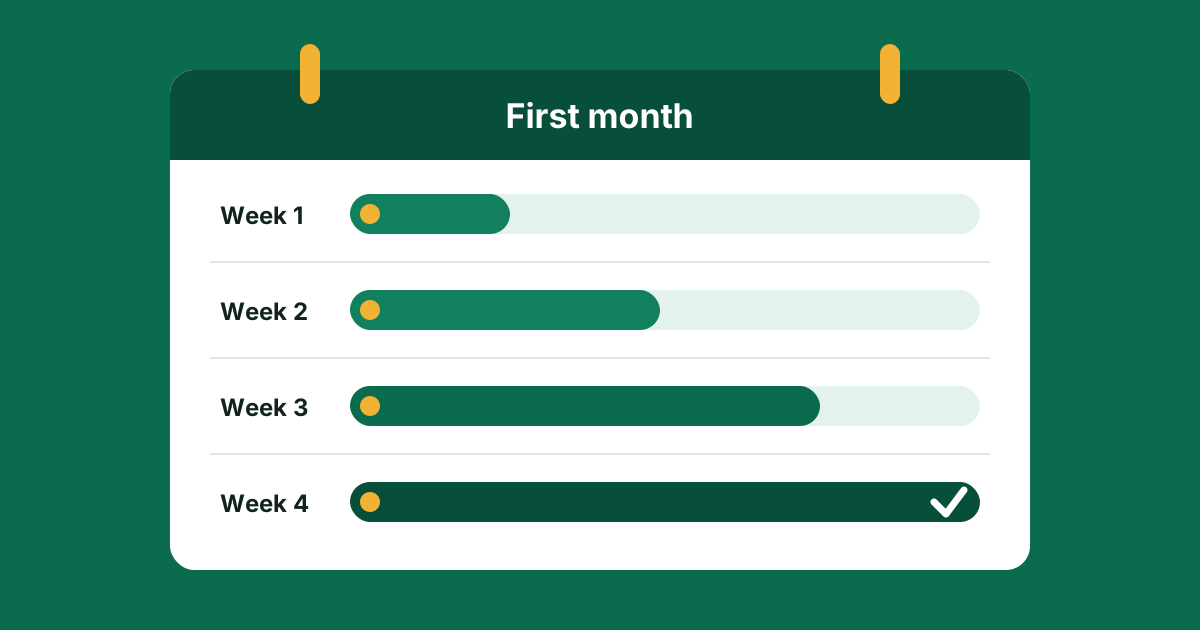
The first month after a layoff is mostly about sequence. A few things have real deadlines: the severance agreement, the unemployment claim, health coverage and your retirement account. Handle those in the first week and you buy yourself the room to run a deliberate job search instead of a panicked one. The rules below are federal and current as of late 2026; state agencies decide the details.
The first 48 hours
- Do not sign anything on the spot. Take the documents home.
- Collect the paperwork. Termination letter with your last day, severance agreement, benefits end date, final pay and accrued leave details, and equity statements.
- Save what is yours. Personal files, your own contacts, copies of performance reviews and your offer letter. Do not take company documents or customer data.
- Ask the questions in writing. When does health coverage end? Is unused leave paid out? What happens to the bonus or commission already earned? How will the company describe the departure to reference checkers?
Severance: what to check before you sign
Federal law does not require severance. The Department of Labor says there is no requirement in the Fair Labor Standards Act for severance pay; it is a matter of agreement between employer and employee. In practice, severance is what the company pays in return for your signature on a release of legal claims. That makes it a contract, and contracts can be read, questioned and sometimes improved.
Read for these points:
- The amount and how it is paid. Lump sum or salary continuation, and whether it stops if you find a new job.
- Health coverage. Whether the company pays any COBRA premiums, and for how long.
- Earned pay. Bonus, commission and accrued leave. State law, not the agreement, often decides whether unused leave must be paid out and when the final paycheck is due.
- Equity. Whether vesting is accelerated and how long you have to exercise vested options. Plans often set a short window after termination; see equity compensation explained.
- Restrictions. Non-compete, non-solicitation, confidentiality and non-disparagement clauses, and whether they are new or restate what you already signed.
If you are 40 or older, the release of age discrimination claims has to meet specific federal standards. According to the EEOC's guidance on severance agreements, you must be advised in writing to consult an attorney and given at least 21 days to consider the offer, or 45 days when the offer is part of a group layoff or exit program, plus seven days after signing to revoke. No agreement can take away your right to file a charge with the EEOC or take part in its proceedings.
Asking for changes is normal and rarely puts the offer at risk. The realistic requests are an extra few weeks of pay, employer-paid COBRA, a later official end date, a neutral reference statement or a longer option exercise window. If the amount is significant, or you believe the selection was discriminatory or retaliatory, an hour with an employment lawyer before signing is money well spent.
Severance is taxed as wages. Social Security, Medicare and federal income tax withholding all apply, and employers commonly withhold on a lump sum at the flat federal rate for supplemental wages, 22% in 2026, so the net is smaller than the headline.
Notice under the WARN Act
The federal WARN Act requires employers with 100 or more employees, not counting part-time workers, to give 60 days' written notice of a plant closing or mass layoff. Under the regulations, a plant closing means a shutdown that costs 50 or more employees their jobs at a single site; a mass layoff means job losses at a single site for at least 50 employees who make up at least 33 percent of the workforce there, or for 500 or more employees regardless of percentage. There are exceptions, including unforeseeable business circumstances.
For remote employees the "single site" question is not simple. The regulations assign workers who are outstationed or travel to the site that is their home base, from which their work is assigned, or to which they report, and how that applies to a fully remote employee depends on the facts. Several states have their own notice laws with lower thresholds. If you received no notice in a large layoff, ask your state labor department or a lawyer.
Unemployment insurance: file in the first week
Unemployment insurance is run by each state under federal rules. The Department of Labor's overview gives the basics:
- You must generally be unemployed through no fault of your own. A layoff qualifies.
- You must meet your state's requirements for wages earned or time worked during a base period, which in most states is the first four of the last five completed calendar quarters before you file.
- You should contact the state program as soon as possible after becoming unemployed.
- You generally file with the state where you worked. If you worked in a state other than the one where you live, or in several states, the agency in your current state can tell you how to file with the others.
For a remote employee, "where you worked" normally means the state where you physically did the work and where your employer reported your wages, not the state of the company's headquarters.
Three more points:
- Severance can affect timing. Some states delay or reduce benefits for weeks covered by severance; others do not. File anyway and report the severance accurately; the state will apply its rule.
- You must certify every week and meet your state's work-search requirements. Keep a log of applications from day one.
- Benefits are taxable. The IRS says you must include unemployment compensation in income; you will receive Form 1099-G, and you can ask for federal withholding with Form W-4V.
Health coverage: two deadlines
Find out the exact date your employer coverage ends. Some plans end on your last day, others at the end of that month.
| COBRA | Marketplace plan | |
|---|---|---|
| What it is | Your existing employer plan, continued | A new individual plan |
| Who can use it | Employers with 20 or more employees; many states extend similar rights at smaller firms | Anyone losing job-based coverage |
| Deadline | 60 days to elect, then 45 days for the first payment | Apply within 60 days of losing coverage |
| Cost | Usually the full premium plus 2 percent | Depends on plan and income |
| Duration | Generally up to 18 months after job loss | Ongoing |
The details come from the Department of Labor's COBRA questions and answers and from HealthCare.gov. COBRA coverage can reach back to the date your employer plan ended once you elect and pay, which protects you against a gap during the election period. The choice is not freely reversible: HealthCare.gov notes that if you drop COBRA voluntarily outside open enrollment, that alone does not open a special enrollment period. Compare both options before the 60 days run out, and check whether your household income now qualifies you for Medicaid.
Retirement accounts and other benefits
Your 401(k) balance is yours, subject to the vesting schedule for employer contributions. You can usually leave it where it is, move it to a new employer's plan later, or roll it into an IRA. The IRS rollover rules favor a direct rollover from plan to plan or IRA: if the plan pays the money to you instead, it must withhold 20% and you have 60 days to deposit the full amount elsewhere. If you have a 401(k) loan, ask the plan what happens to it now.
A health savings account stays with you. Flexible spending account money usually does not, so submit claims before coverage ends. More is in benefits in a remote job.
A four-week job search plan
Week 1: paperwork and inventory. File the unemployment claim, calendar every deadline above, and build a bare-bones budget so you know how many months you have. Write down what you shipped, sold or fixed in your last role while you still remember the numbers.
Week 2: materials and targets. Update your resume with those results, using the guidance in a resume for remote jobs. Decide on two or three target roles and check what they pay on the salary pages, so you can answer the pay question without guessing. Tell your network plainly that you were laid off and what you are looking for; former colleagues are the fastest route to interviews.
Week 3: applications at a steady rate. Ten well-matched applications a week on employers' own career pages beat fifty quick ones. Use how to find legitimate remote jobs to choose sources, and be alert: people who announce a layoff publicly are targeted by fake recruiters, as described in remote job scams: the red flags.
Week 4: interviews and adjustment. Review what got responses and what did not, and shift your targets accordingly. Prepare your account of the layoff in two sentences: what happened to the business, and what you are looking for next.
What to do today
Put four dates in your calendar: the severance signing deadline, the day you will file for unemployment, the last day to elect COBRA and the last day to apply for a Marketplace plan. Then look at the open remote jobs in your field. For anything that turns on your state's rules or a large sum, confirm with the state agency, a lawyer or a tax professional before you act.